
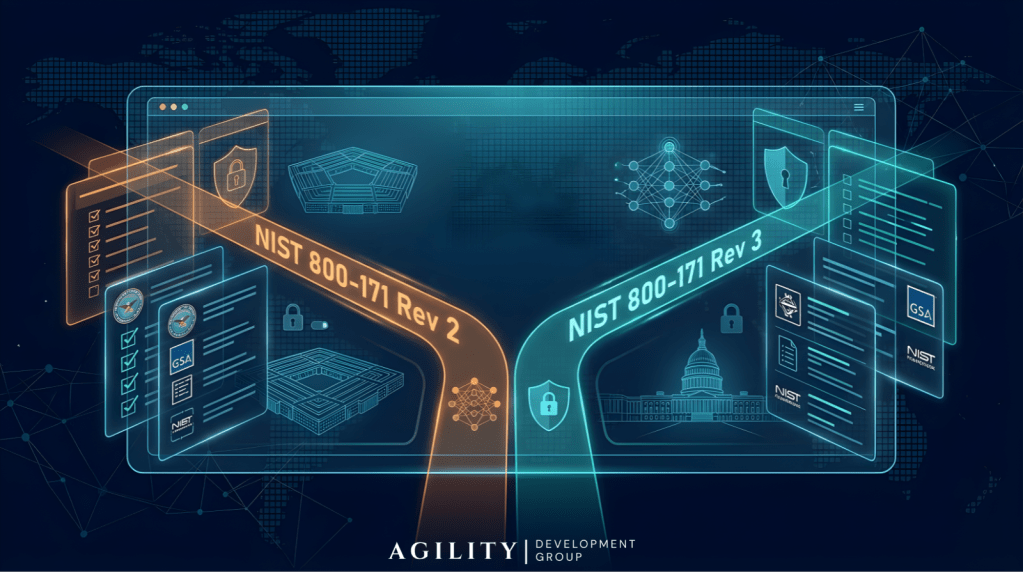
GSA Schedule Contract Consulting
What is the GSA Schedule
The U.S. General Services Administration (GSA) Multiple Award Schedule (MAS) is a pre-vetted federal contract vehicle that allows U.S. government agencies to buy commercial goods and services directly from approved vendors. With billions in annual spending flowing through MAS contracts, it offers vendors a powerful way to streamline sales, reduce competition, and build recurring revenue across federal agencies.
The GSA Multiple Award Schedule is Also Called:
- GSA Schedule
- GSA MAS
- GSA Contract
- GSA Program
- Federal Supply Schedule (FSS)
Benefits of the GSA Schedule
For businesses looking to grow in the federal market, the GSA Schedule is increasingly becoming a key vehicle for government procurement.
Gateway to Opportunity
The Schedule gives access to platforms like GSA Advantage! and eBuy that connect you directly with agencies actively seeking your products and services.
Billions in Funding
In 2024, GSA MAS contracts accounted for over $51 billion in spending, and ongoing federal initiatives are poised to make that number climb even higher.
Preferred Customer Status
A GSA Contract signals to buyers that your company has been pre-qualified for quality and fair pricing. It places you among a select group of trusted vendors
Long-Term Vehicle
GSA Schedules are awarded for five (5) years, with possible extensions up to 20 years, and can be modified to keep pace with changes to your offer.
GSA Schedule Services
Onboarding onto the GSA Multiple Award Schedule can be complex and time-consuming, but Agility simplifies the process by clarifying the purpose of each step, guiding you through the eOffer system, and crafting compliant content aligned to your company’s history.
Why Hire a Consultant for a GSA Schedule?
Obtaining a GSA MAS contract can open doors to significant federal contracting opportunities. However, the process is complex and resource-intensive. Below are the primary reasons why many companies choose to hire a GSA consultant rather than pursue the schedule alone.
Complexity of Requirements
GSA submissions involve federal acquisition regulations, CSP disclosures, SIN selection, TAA compliance, and extensive documentation. Consultants are familiar with these requirements and help you avoid common mistakes.
Avoiding Rejections & Delays
Pricing errors, documentation mistakes or weak narratives often trigger rejections or cause long delays. Consultants increase the chances of acceptance on the first submission.
Faster Time to Market
Consultants can usually complete the process in 8–14 weeks. Without expertise, internal teams may take 6–12+ months to navigate the system.
Strategic Guidance
Consultants assist with SIN selection, pricing strategy, and long-term positioning so the contract works for your business goals, not just compliance.
Internal Resource Constraints
Most small to mid-size businesses don’t have the staff bandwidth or GSA expertise to complete the work efficiently in-house.
Post-Award Support
Consultants often offer ongoing services for GSA Advantage
uploads, SIP/FCP support, IFF reporting, and modifications.
Perspectives on Government Contracting

CMMC & Cybersecurity Intelligence Brief – 08
We’ve reached a critical inflection point in the defense industrial base cybersecurity landscape. While CMMC Phase 1 enforcement remains active and unrelenting—with contract awards directly tied to SPRS posting status—the real challenge emerging this quarter is twofold: Phase 2 implementation begins in just nine months (November 2026), and the FY 2026 NDAA introduces three major new compliance requirements that extend far beyond CMMC. Supply chain security mandates are tightening, AI/ML security frameworks are being developed, and DoD is moving toward requirement harmonization by June 2026. For contractors operating on tight margins, the cumulative impact of these overlapping deadlines and expanding scopes creates both urgency and strategic opportunity.

CMMC & Cybersecurity Intelligence Brief – 07
We’ve reached a critical inflection point in the defense industrial base cybersecurity landscape. While CMMC Phase 1 enforcement remains active and unrelenting—with contract awards directly tied to SPRS posting status—the real challenge emerging this quarter is twofold: Phase 2 implementation begins in just nine months (November 2026), and the FY 2026 NDAA introduces three major new compliance requirements that extend far beyond CMMC. Supply chain security mandates are tightening, AI/ML security frameworks are being developed, and DoD is moving toward requirement harmonization by June 2026. For contractors operating on tight margins, the cumulative impact of these overlapping deadlines and expanding scopes creates both urgency and strategic opportunity.
CMMC & Cybersecurity Intelligence Brief
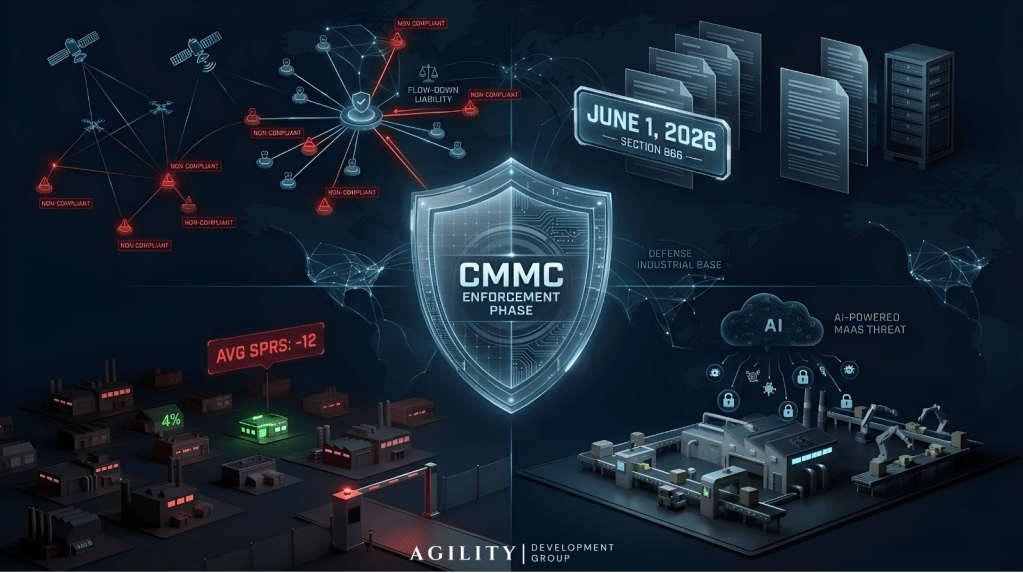
We’ve reached a critical inflection point in the defense industrial base cybersecurity landscape. While CMMC Phase 1 enforcement remains active and unrelenting—with contract awards directly tied to SPRS posting status—the real challenge emerging this quarter is twofold: Phase 2 implementation begins in just nine months (November 2026), and the FY 2026 NDAA introduces three major new compliance requirements that extend far beyond CMMC. Supply chain security mandates are tightening, AI/ML security frameworks are being developed, and DoD is moving toward requirement harmonization by June 2026. For contractors operating on tight margins, the cumulative impact of these overlapping deadlines and expanding scopes creates both urgency and strategic opportunity.