


CMMC & Cybersecurity Intelligence Brief – 07
We’ve reached a critical inflection point in the defense industrial base cybersecurity landscape. While CMMC Phase 1 enforcement remains active and unrelenting—with contract awards directly tied to SPRS posting status—the real challenge emerging this quarter is twofold: Phase 2 implementation begins in just nine months (November 2026), and the FY 2026 NDAA introduces three major new compliance requirements that extend far beyond CMMC. Supply chain security mandates are tightening, AI/ML security frameworks are being developed, and DoD is moving toward requirement harmonization by June 2026. For contractors operating on tight margins, the cumulative impact of these overlapping deadlines and expanding scopes creates both urgency and strategic opportunity.
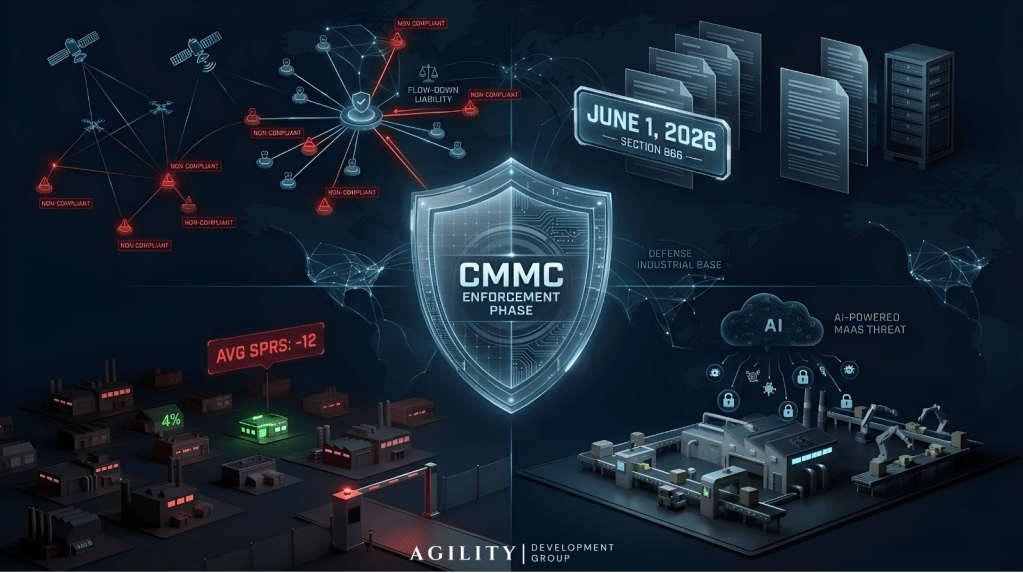
CMMC & Cybersecurity Intelligence Brief
We’ve reached a critical inflection point in the defense industrial base cybersecurity landscape. While CMMC Phase 1 enforcement remains active and unrelenting—with contract awards directly tied to SPRS posting status—the real challenge emerging this quarter is twofold: Phase 2 implementation begins in just nine months (November 2026), and the FY 2026 NDAA introduces three major new compliance requirements that extend far beyond CMMC. Supply chain security mandates are tightening, AI/ML security frameworks are being developed, and DoD is moving toward requirement harmonization by June 2026. For contractors operating on tight margins, the cumulative impact of these overlapping deadlines and expanding scopes creates both urgency and strategic opportunity.

CMMC & Cybersecurity Intelligence Brief
CMMC Phase 1 enforcement is now directly affecting contract awards, with SPRS CMMC status required for eligibility and C3PAO assessment backlogs pushing into late 2026. Meanwhile, escalating threats—including actively exploited legacy vulnerabilities flagged by CISA and insider-focused ransomware tactics—underscore the urgency for contractors to accelerate readiness as the Department of Defense moves toward future adoption of NIST SP 800-171 Revision 3.