Uncategorized

Uncategorized, Weekly Brief

CMMC & Cybersecurity Intelligence Brief – 08

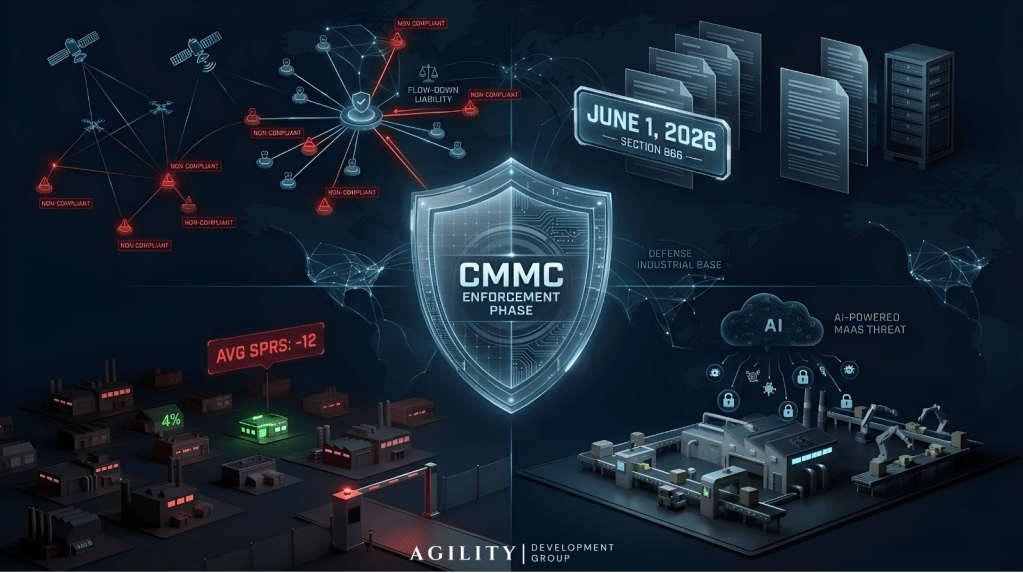
We’ve reached a critical inflection point in the defense industrial base cybersecurity landscape. While CMMC Phase 1 enforcement remains active and unrelenting—with contract awards directly tied to SPRS posting status—the real challenge emerging this quarter is twofold: Phase 2 implementation begins in just nine months (November 2026), and the FY 2026 NDAA introduces three major new compliance requirements that extend far beyond CMMC. Supply chain security mandates are tightening, AI/ML security frameworks are being developed, and DoD is moving toward requirement harmonization by June 2026. For contractors operating on tight margins, the cumulative impact of these overlapping deadlines and expanding scopes creates both urgency and strategic opportunity.

Uncategorized, Weekly Brief

CMMC & Cybersecurity Intelligence Brief – 07

We’ve reached a critical inflection point in the defense industrial base cybersecurity landscape. While CMMC Phase 1 enforcement remains active and unrelenting—with contract awards directly tied to SPRS posting status—the real challenge emerging this quarter is twofold: Phase 2 implementation begins in just nine months (November 2026), and the FY 2026 NDAA introduces three major new compliance requirements that extend far beyond CMMC. Supply chain security mandates are tightening, AI/ML security frameworks are being developed, and DoD is moving toward requirement harmonization by June 2026. For contractors operating on tight margins, the cumulative impact of these overlapping deadlines and expanding scopes creates both urgency and strategic opportunity.

Uncategorized, Weekly Brief

CMMC & Cybersecurity Intelligence Brief

We’ve reached a critical inflection point in the defense industrial base cybersecurity landscape. While CMMC Phase 1 enforcement remains active and unrelenting—with contract awards directly tied to SPRS posting status—the real challenge emerging this quarter is twofold: Phase 2 implementation begins in just nine months (November 2026), and the FY 2026 NDAA introduces three major new compliance requirements that extend far beyond CMMC. Supply chain security mandates are tightening, AI/ML security frameworks are being developed, and DoD is moving toward requirement harmonization by June 2026. For contractors operating on tight margins, the cumulative impact of these overlapping deadlines and expanding scopes creates both urgency and strategic opportunity.

Uncategorized, Weekly Brief

CMMC & Cybersecurity Intelligence Brief

CMMC Phase 1 enforcement is now directly affecting contract awards, with SPRS CMMC status required for eligibility and C3PAO assessment backlogs pushing into late 2026. Meanwhile, escalating threats—including actively exploited legacy vulnerabilities flagged by CISA and insider-focused ransomware tactics—underscore the urgency for contractors to accelerate readiness as the Department of Defense moves toward future adoption of NIST SP 800-171 Revision 3.

Uncategorized

Turning Your SBIR/STTR Into Real Business Growth

This post is the seventh and final part of the “SBIR/STTR 101 for New Entrants” series. You can find links to all installments below. 1 — What Are SBIR & STTR? (The Beginner Breakdown) 2 — How the SBIR/STTR Process Works: The Three Phases 3 — Understanding SBIR/STTR Topics and Finding the Right Opportunity 4 – What You Need to Prepare Before Applying For an SBIR/STTR 5 – Writing a Strong SBIR/STTR Proposal 6 – What to Do After You Submit (And If You Don’t Win) Introduction Winning an SBIR or STTR award is a notable achievement, but the companies that realize the greatest value are those that treat the award as the beginning of a longer business strategy, not an endpoint. The SBIR/STTR program is intentionally structured to support the full lifecycle of innovation, from early feasibility to operational deployment and commercial adoption. For small and mid-sized businesses, the program can serve as both a financial resource and a market-entry mechanism. This section explains how companies can turn funded R&D into sustainable revenue, deeper agency relationships, and expanded commercial opportunities. SBIR/STTR as a Gateway The SBIR/STTR program provides a level of access to federal stakeholders that is rare for small businesses. Throughout Phase I and Phase II, companies interact directly with technical program managers, end-users, and acquisition personnel, who influence future procurement decisions. How to Leverage This Access Effectively: By treating agency personnel as long-term partners rather than short-term reviewers, companies set the foundation for stability and growth within the federal market. Building Toward Phase III and Beyond Phase III represents the commercialization authority of the SBIR/STTR program. Although no SBIR dollars fund this phase, agencies can issue sole-source contracts to procure technologies developed in Phases I and II. This makes Phase III one of the most powerful features of the program for small businesses. Key Preparation Steps Include: Companies that build Phase III planning into their workflow from the beginning often move more smoothly into follow-on contracts and full-scale adoption. Strengthening Commercial Market Potential Many agencies expect companies to pursue commercial markets alongside federal pathways, especially organizations like NSF, NIH, NASA, and DOE. Even within defense, dual-use commercialization is becoming increasingly important as agencies look for technologies that strengthen both national security and the private sector. To Strengthen Commercial Viability: A solid commercial strategy strengthens your credibility with reviewers and investors and positions your company for sustainable growth beyond the SBIR/STTR program. Expanding Through Partnerships Partnerships serve as catalysts for both technical advancement and market expansion. They can accelerate product development, open new pathways for adoption, and provide access to resources that smaller companies may not have internally. Examples include: Effective partnerships help companies scale faster and diversify revenue streams, making SBIR/STTR investments more impactful over time. Using SBIR/STTR to Build Organizational Capability Beyond technology development, participation in SBIR/STTR helps companies build internal capacity across multiple operational areas. This includes: Companies that approach SBIR/STTR as an opportunity to refine their internal capabilities position themselves for stronger long-term performance in both government and commercial sectors. Key Considerations for Businesses Conclusion The SBIR and STTR programs provide a structured pathway for innovation, customer engagement, and long-term growth. Small and mid-sized businesses that leverage these programs effectively gain significant advantages, including early access to federal customers, structured R&D support, and a clear transition pathway toward commercialization and procurement. Throughout this guide, we have outlined: Success in SBIR/STTR comes from preparation, clarity, strategic planning, and consistent engagement. Companies that approach each phase deliberately and adapt based on feedback and opportunity position themselves for stronger performance, higher transition rates, and deeper market penetration. For businesses looking to expand into the government sector or strengthen their innovation pipeline, SBIR and STTR offer a clear, proven pathway. With the right structure and support, these programs can help transform ideas into deployable solutions and emerging companies into strategic industry players. If your business is ready to move from potential to performance in the SBIR/STTR ecosystem, Agility can help you get there. Our team brings proven experience in opportunity identification, proposal development, transition planning, and long-term growth strategies that align with federal expectations and commercial goals. Whether you’re preparing your first submission, refining a previous attempt, or planning how to scale beyond Phase II, Agility provides the structure, clarity, and expert guidance you need to compete with confidence. Partner with Agility to strengthen your SBIR/STTR strategy and accelerate your path to federal and commercial success.


Uncategorized

Understanding Topics and Finding the Right Opportunity

This post is part three of the “SBIR/STTR 101 for New Entrants” series. You can find links to all installments below. Part 1 — What Are SBIR & STTR? (The Beginner Breakdown) Part 2 — How the SBIR/STTR Process Works: The Three Phases Part 4 — Understanding SBIR/STTR Topics and Finding the Right Opportunity Introduction Before committing time and resources to a proposal, it is essential for businesses to understand how SBIR/STTR topics are structured and how to determine whether an opportunity is the right fit. Identifying a topic that aligns with your technology, capabilities, and long-term strategy is one of the most critical parts of the entire process. Companies that choose well tend to perform better, build stronger relationships, and achieve more meaningful downstream results. Where to Find Topics SBIR/STTR topics are published on agency-specific portals and on SBIR.gov. Each agency releases topics on a predictable schedule throughout the year. The primary sources include: Businesses should monitor these sites regularly and sign up for agency newsletters or alerts, as many topics are released only once or twice per year. Types of Topics to Expect Each agency approaches SBIR/STTR differently. Understanding these differences will help companies determine where they fit best. Department of Defense (DoD) Topics Science-Focused Agencies (NSF, DOE, NASA) Health and Life Science Agencies (NIH, CDC, etc.) Understanding these distinctions helps companies avoid pursuing opportunities that do not align with their capabilities or market objectives. How to Read a Topic Effectively A well-structured review of a topic should include the following steps: Engaging Early with Program Managers Most agencies allow businesses to contact topic authors or program managers before submitting a proposal. This step is often underutilized but highly beneficial. Program managers can provide clarity on: This early outreach is a strong signal of professionalism and preparation, and it often helps companies refine their scope before drafting a proposal. Practical Example A small software firm reviewing a DoD topic may find that the requirements involve integration with a specific platform or operational scenario. By contacting the program manager, the company learns that the agency is prioritizing solutions with scalable architectures. With that insight, the firm adjusts its proposed approach to emphasize modularity—strengthening both its proposal and its long-term product strategy. Key Considerations for Businesses How Companies Should Use This Information Businesses should create an internal review process that evaluates each topic based on technical feasibility, strategic value, resource requirements, and potential transition opportunities. This structured approach ensures that leadership invests time in opportunities that are credible, achievable, and aligned with long-term goals. Find Agency Specific Topic Information Here